


ICPC at SplinterCon 2025 in Paris!
ICPC at SplinterCon Paris 2025: constitutional limits to EU digital sovereignty and the infrastructure debate
On 8 December 2025, the Internet & Communication Policy Center (ICPC) took part in SplinterCon Paris 2025 (held in Paris from 8 to 10 December 2025), titled “Sovereignty: Autonomy or Isolation?”, contributing to key discussions on Europe’s digital sovereignty, infrastructural resilience, and the risk of internet fragmentation.
Paper presentation
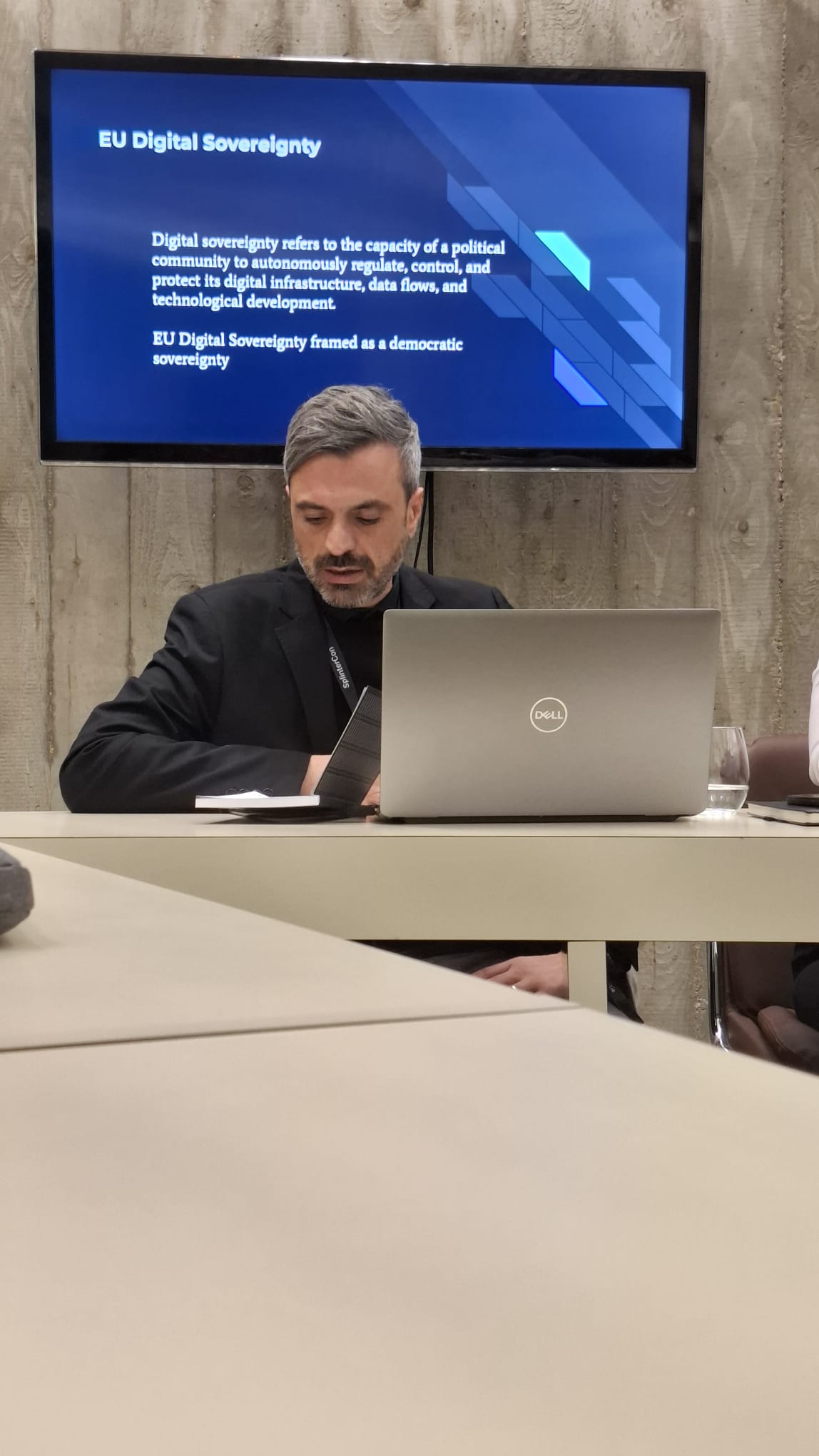
Mauro Santaniello, Chiara Spiniello, and Nicola Palladino presented the paper Does EU digital sovereignty have constitutional limits?, focusing on how the EU’s constitutional core—rooted in the TEU, TFEU, and the EU Charter of Fundamental Rights—can constrain digital sovereignty initiatives, especially where emergency powers and the protection of fundamental rights intersect.
The presentation mapped the legal “boundaries” embedded in EU primary law (including provisions on restrictive measures, defence, essential security interests, and the rules governing limitations of rights) and asked when sovereignty-driven infrastructure projects could shift from resilience tools to potential vectors of fragmentation.
An empirical focus was placed on DNS4EU, a European Commission–funded initiative aimed at building a recursive, federated, privacy-enhancing DNS resolver infrastructure within the EU. The paper argued that the EU’s rights-based legal order can work as a lato sensu constitutional constraint—helping preserve openness and the free flow of information while preventing the “weaponization” of internet infrastructure.
ICPC at SplinterCon Paris 2025



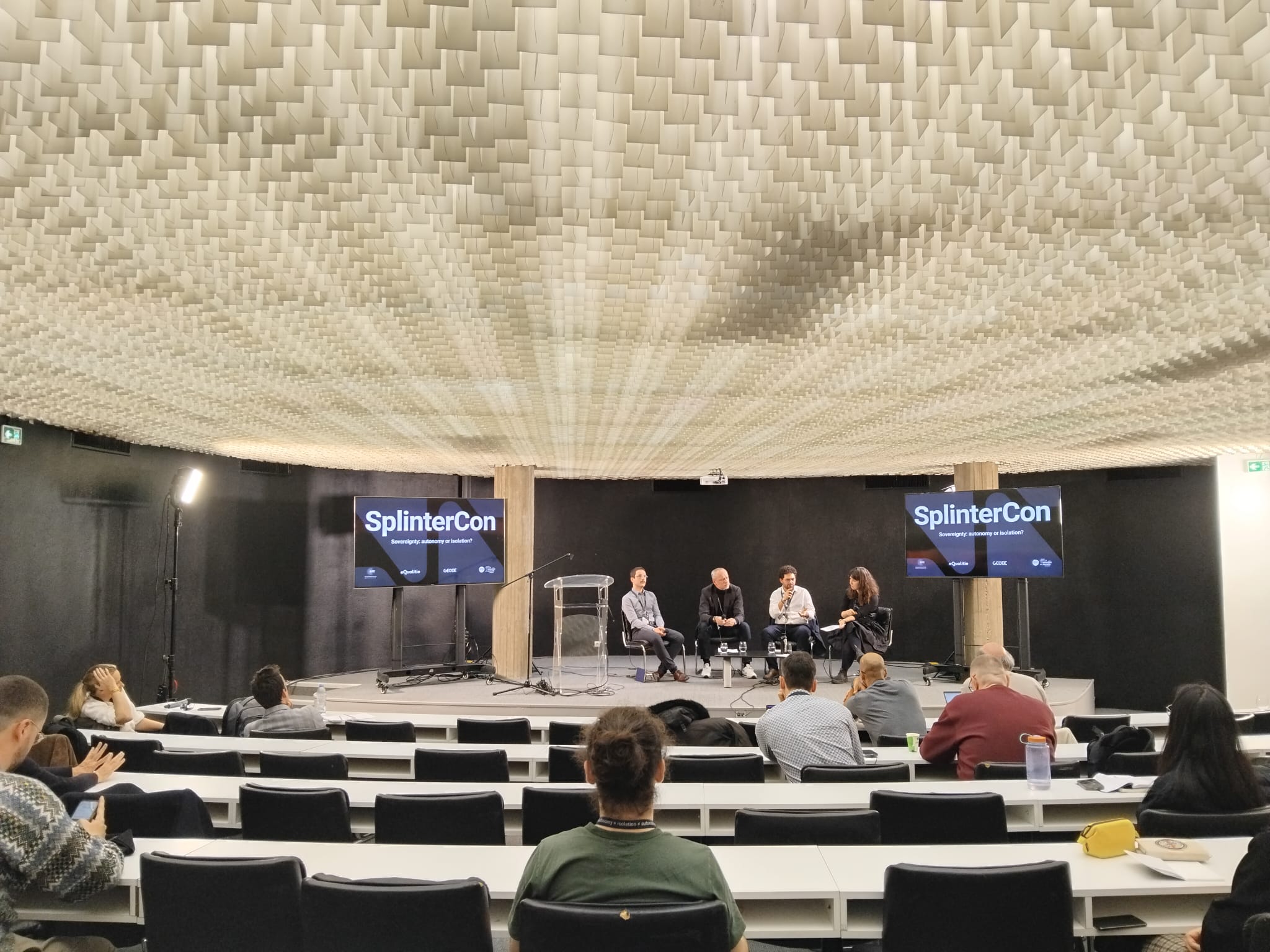
Roundtable: “EU Sovereignty, from Servers to Semiconductors”
Later that day, Armando Antonio Ferrara participated as a guest in the roundtable “EU Sovereignty, from Servers to Semiconductors” (16:45–17:45), moderated by Ksenia Ermoshina (eQualitie & CNRS), alongside:
- Alban Schmutz, Cloud Data Engine
- Vincent Giraud, Deuxfleurs & Chatons
- Arnaud Franquinet, Gandi
The discussion compared policy discourses (promises by funders and decision-makers) with real-world practices: which technical solutions have already been deployed for years, what “resilience” means in operational terms, and how readiness and risk management change when sovereignty is pursued across infrastructure layers—from DNS resolvers and hosting to supply chains and semiconductors. A central theme was also European awareness (public sector and industry) of the existence of viable, sovereign alternatives.
Roundtable moments

Research context
These contributions are an outcome of the PRIN 2022 project: “PRIN 2022KTTSBC – CUP Master D53D23007300006 Digital Sovereignty in Comparative Perspective: State Authority, Corporate Power and Fundamental Rights in Cyberspace”.
ICPC is grateful to the organisers and the community at SplinterCon for a timely space to connect legal, political, and technical perspectives on sovereignty—without losing sight of fundamental rights and the open internet.

Comments are closed, but trackbacks and pingbacks are open.