


New Publication! | The Blind Watcher: Accountability Mechanisms in the Artificial Intelligence Act
The Blind Watcher: Accountability Mechanisms in the Artificial Intelligence Act
A new chapter by Nicola Palladino examining how the EU’s Artificial Intelligence Act operationalises accountability through a risk-based regulatory approach.
The Internet & Communication Policy Center (ICPC) is pleased to announce the publication of “The Blind Watcher: Accountability Mechanisms in the Artificial Intelligence Act”, a chapter that explores the role of accountability in AI governance and its centrality for building trust and public acceptance of AI systems.
Publication details
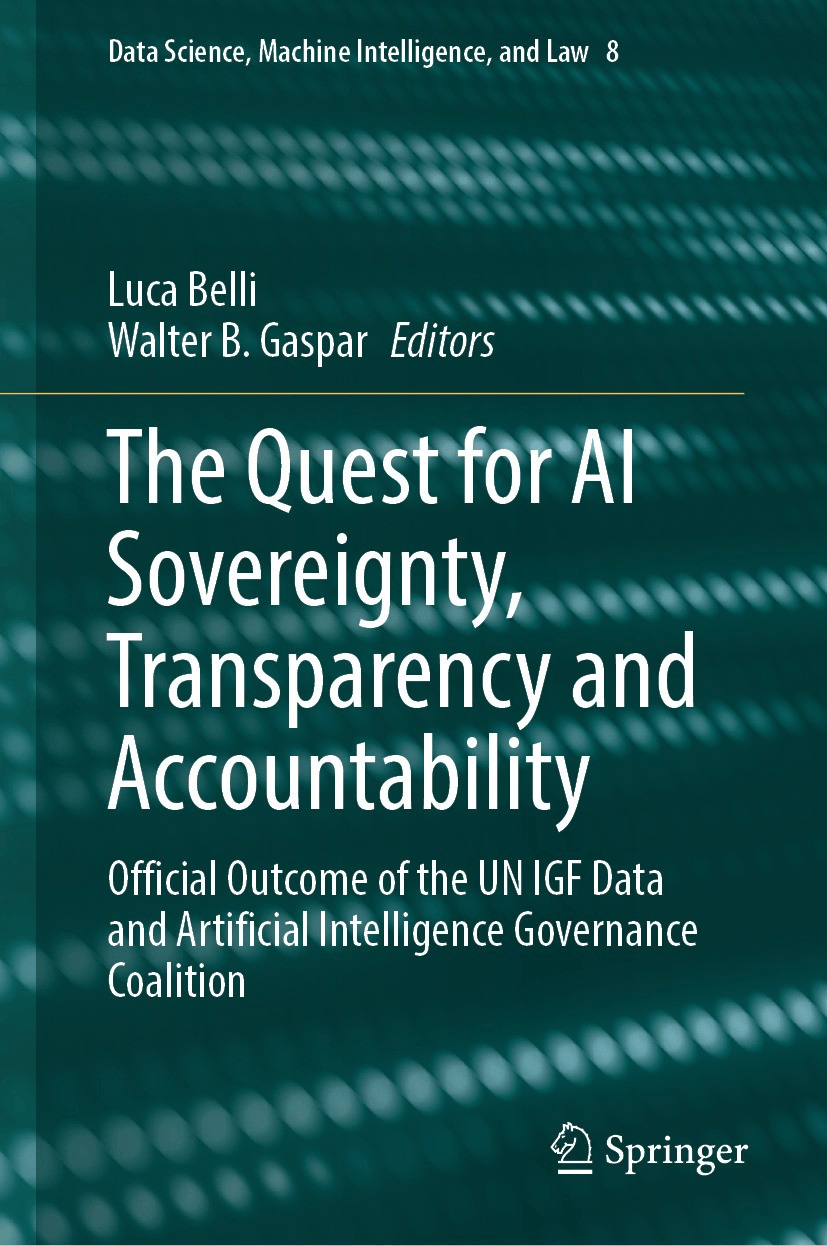
In The Quest for AI Sovereignty, Transparency and Accountability
Subtitle Official Outcome of the UN IGF Data and Artificial Intelligence Governance Coalition
Editors Luca Belli; Walter B. Gaspar
Series Data Science, Machine Intelligence, and Law (DSMIL), Vol. 8
We invite you to read the chapter and share it within your networks — and congratulations to Nicola on this publication!

Comments are closed, but trackbacks and pingbacks are open.