

New Publication! | Gli Stati membri dell’UE al bivio della «terza via» digitale. Uno studio empirico (Parte I)
New Article on EU Member States and the Digital “Third Way”
Published in Diritto Pubblico Europeo – Rassegna online, the empirical study examines whether the EU discourse on digital sovereignty and digital constitutionalism finds correspondence in the strategies of eight Member States.
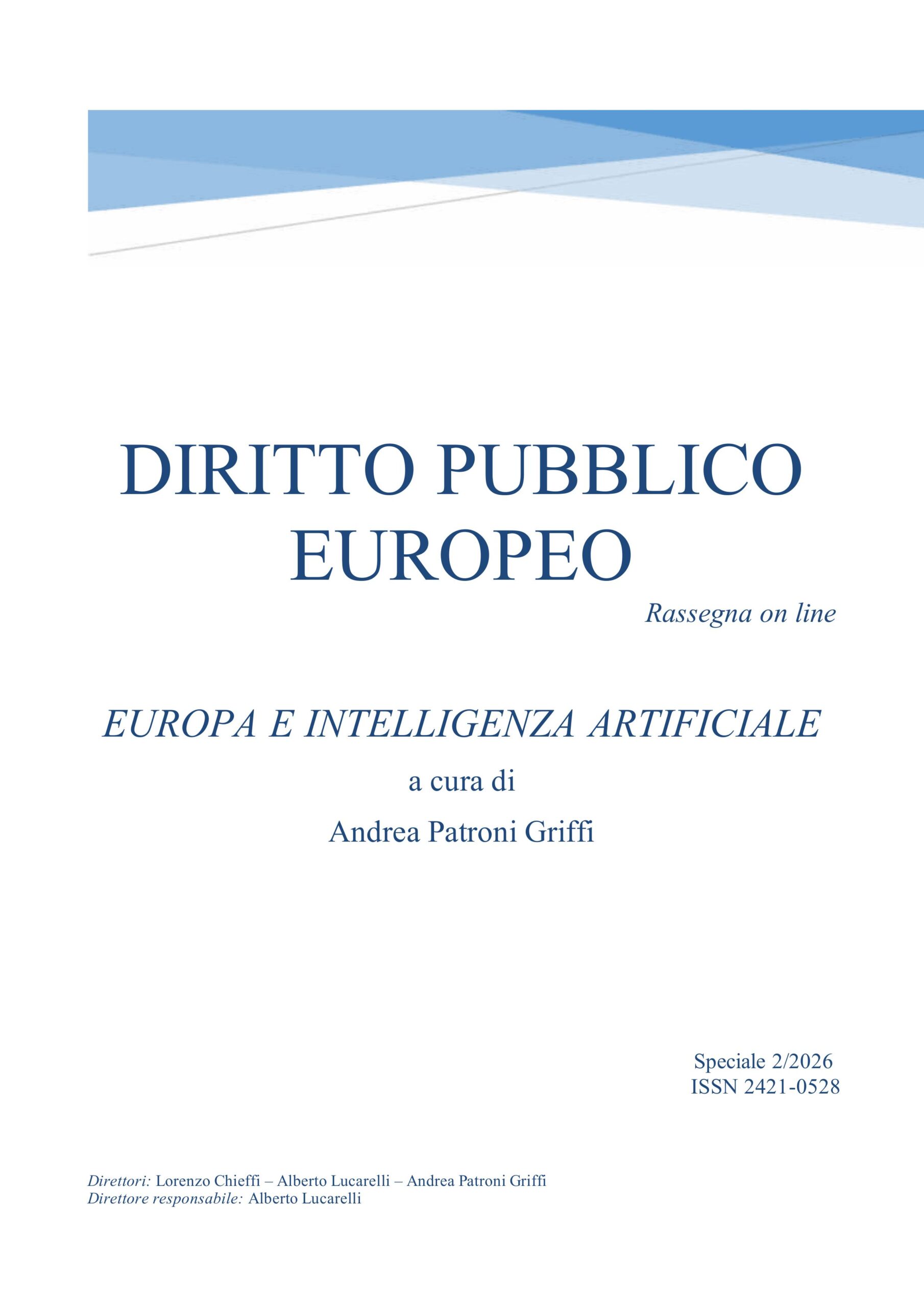
The article “Gli Stati membri dell’UE al bivio della «terza via» digitale. Uno studio empirico (Parte I)” (EU Member States at the Crossroads of the Digital “Third Way”: An Empirical Study – Part I), by Chiara Spiniello, has been published in Diritto Pubblico Europeo – Rassegna online, special issue 2/2026 Europa e intelligenza artificiale, edited by Andrea Patroni Griffi.
The study asks whether, and to what extent, the pillars of the EU discourse on digital sovereignty and digital constitutionalism are reflected in the strategies of the Member States. It compares France, Germany, Italy, Spain, Poland, Denmark, Portugal and Romania, selected according to a “maximum variation” criterion, combining the political speeches of Heads of State with national “digital” legislation from 2019 to the first half of 2025.
Abstract
This paper examines whether, and to what extent, the key pillars of the European Union discourse on digital sovereignty and digital constitutionalism are reflected in the strategies of EU Member States. The comparative analysis focuses on eight cases (France, Germany, Italy, Spain, Poland, Denmark, Portugal, Romania), selected according to a «maximum variation» criterion. The research design combines two datasets (both within the 2019-first half of 2025 time frame): Heads of State political speeches and national «digital» legislative acts, analysed through semantic-thematic coding and mapped across substantive policy domains. The findings show strong convergence around security and resilience, whereas the rights dimension struggles to crystallise into binding rules. Overall, the EU «third way» is internalised selectively: more advanced on the securitised-technological front, and more uneven with regard to safeguards and democratic accountability.
Abstract in italiano. Il contributo indaga se e in che misura gli assi del discorso dell’Unione europea su sovranità digitale e costituzionalismo digitale trovino corrispondenza nelle strategie degli Stati membri dell’UE. L’analisi comparata si concentra su otto casi (Francia, Germania, Italia, Spagna, Polonia, Danimarca, Portogallo, Romania), selezionati secondo un criterio di «massima variazione». Il disegno di ricerca combina due corpus di dati (entrambi ricompresi nell’orizzonte temporale 2019-primo semestre 2025): i discorsi politici dei Capi di Stato e gli atti legislativi nazionali «digitali», sottoposti a codifica semantico-tematica e sistematizzazione per ambiti materiali. I risultati mostrano una convergenza robusta su sicurezza e resilienza, mentre la dimensione dei diritti fatica a tradursi in norme vincolanti. Ne emerge un recepimento selettivo della «terza via» europea: più avanzato sul versante securitario-tecnologico, più disomogeneo su garanzie e accountability democratiche.
Is the EU’s digital “third way” reaching the Member States?
The article starts from the EU’s ambition to offer a “third way” in global Internet governance, between US-style private self-regulation and the state-centric strategies of authoritarian regimes, and tests how far the combination of digital sovereignty and digital constitutionalism is taken up in national speeches and legislation. It is the first part of a longer-term comparison of the digital strategies of the 27 Member States.
The findings point to a robust convergence on security and resilience, while the rights dimension struggles to translate into binding rules. The open question is whether European digital sovereignty can remain a sovereignty “with” rights, rather than one built “against” them.

Comments are closed, but trackbacks and pingbacks are open.