


New Publication! | Digital Constitutionalism Teaching Partnership Article Published in EJLT
New Open Access Article on the Digital Constitutionalism Teaching Partnership
Published in the European Journal of Law and Technology, the article reflects on six years of international, interdisciplinary and advocacy-oriented teaching on digital constitutionalism.
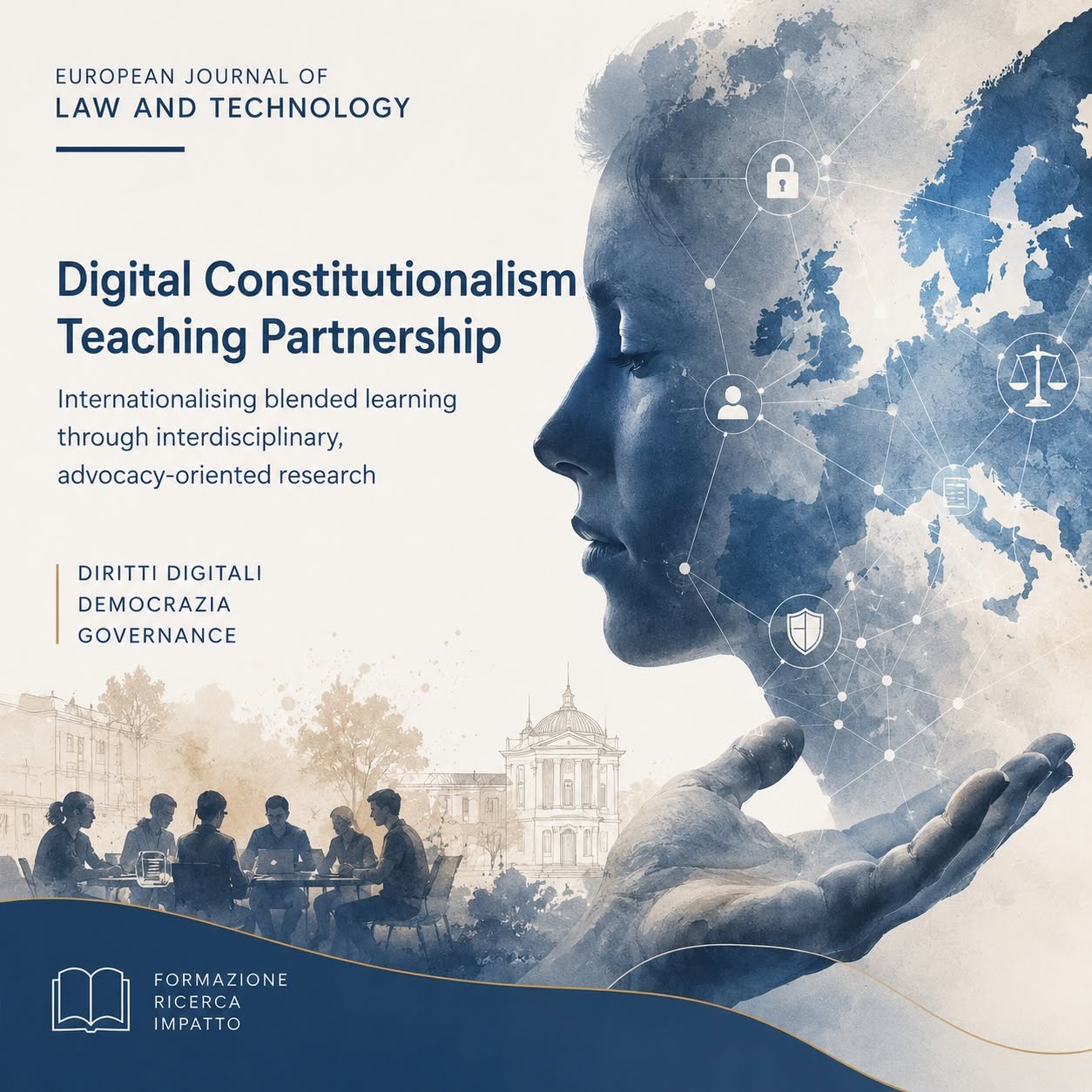
The article “The Digital Constitutionalism Teaching Partnership: Internationalising Blended Learning through Interdisciplinary Advocacy-oriented Research” has been published in the European Journal of Law and Technology.
The contribution presents and critically reflects on the experience of the Digital Constitutionalism Teaching Partnership, an initiative established in 2019 through a collaboration among researchers from European universities working on digital rights, governance and constitutionalism.
Abstract
The Digital Constitutionalism Teaching Partnership was established in 2019 based on a collaboration between researchers from nine European universities working in the field of digital rights, governance, and constitutionalism who teach undergraduate and postgraduate modules. The Covid-19 pandemic facilitated the organisation of synchronous online sessions, which were subsequently integrated with in-person activities and short-term mobilities of students and instructors thanks to the Erasmus+ blended intensive programmes (BIP) funding. This paper offers a reflective account of how digital constitutionalism as a research topic has been embedded in a transnational, interdisciplinary, and advocacy-oriented teaching programme, and draws out the lessons from six years of experience. It investigates how an interdisciplinary research field such as digital constitutionalism can be effectively translated into a subject taught across multiple universities and disciplines through innovative educational modalities and effectively contribute to existing advocacy initiatives. Drawing on instructors’ reflections and students’ evaluations of the Teaching Partnership, the paper examines the research context, pedagogical approaches, benefits, and challenges of establishing the Digital Constitutionalism Teaching Partnership. The paper illustrates how internationalising blended learning through interdisciplinary advocacy-oriented research fits the objectives of training future generations of professionals in people-centred understanding of digital futures.
Teaching digital constitutionalism across borders
Drawing on instructors’ reflections and students’ evaluations, the paper examines the research context, pedagogical approaches, benefits and challenges of establishing the Digital Constitutionalism Teaching Partnership.
It shows how digital constitutionalism can be translated into a subject taught across multiple universities and disciplines through innovative educational modalities, contributing to advocacy initiatives and to the training of future professionals in a people-centred understanding of digital futures.

Comments are closed, but trackbacks and pingbacks are open.